Wednesday, May 13, 2026

Artificial Intelligence (AI) is no longer just a futuristic concept; it’s a dynamic field that’s reshaping the tech industry and offering a plethora of career opportunities for developers. As we delve into the world of AI, we find that it’s not just about creating smart machines but also about fostering a symbiotic relationship where AI acts as a career companion for developers.

The AI job market is booming, with roles like machine learning engineers, data scientists, and AI product managers becoming increasingly prominent. These positions are critical in developing algorithms, analyzing data, and managing AI-powered products that are transforming industries. For those with a knack for problem-solving and a passion for technology, AI careers offer a chance to be at the forefront of innovation.

Education platforms like Coursera emphasize the importance of acquiring the right skills and knowledge to thrive in AI-related roles. From understanding machine learning techniques to mastering data engineering, the learning curve can be steep but rewarding. As AI continues to evolve, so does the need for continuous learning and upskilling, making it essential for tech professionals to stay abreast of the latest advancements.

The impact of AI on the workforce is multifaceted. The BBC highlights AI’s potential to promote inclusivity and equity in hiring processes, suggesting that AI tools could help create a more diverse and balanced workplace. Moreover, as AI becomes more integrated into our daily work, there’s a growing emphasis on upskilling employees to work alongside AI effectively.

Forbes points out that we’re experiencing a ‘Creative Renaissance’ thanks to AI. Generative AI is revolutionizing creative sectors by automating repetitive tasks, aiding in brainstorming, and allowing for rapid design iterations. This fusion of AI and human creativity is not only enhancing productivity but also unlocking new realms of imagination and potential.

VentureBeat’s insights from venture capitalists predict a significant year for AI in 2024. They foresee a rise in multimodal models that combine text, images, and audio, and a democratization of AI through open-source models. However, challenges like GPU shortages and the need for specialized hardware for AI inference remain on the horizon.

AI is carving out its place as an indispensable career companion for developers. It’s a field rich with opportunities for those willing to dive into its complexities and harness its capabilities. As AI continues to permeate various aspects of the tech industry, it’s clear that embracing AI is not just about adapting to a new tool—it’s about stepping into a future where technology and human ingenuity converge to create a world of endless possibilities.

0 comment
0 FacebookTwitterPinterestTumblrVKWhatsappEmail

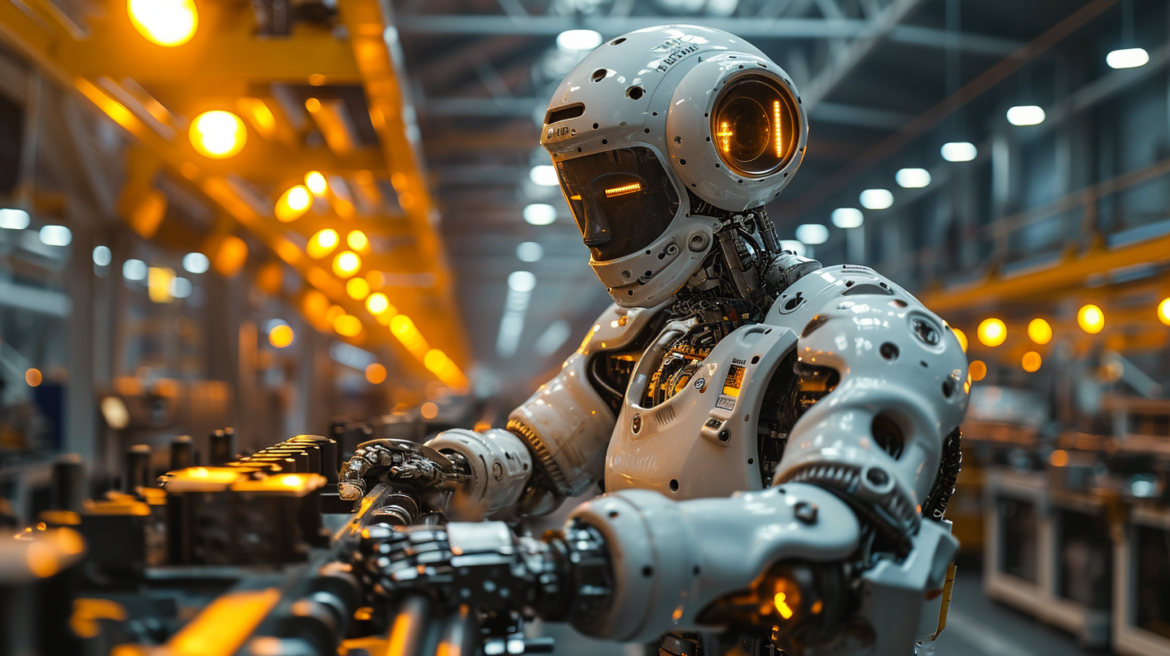
The robotics and AI landscape is undergoing a transformative shift, with the potential to unlock unlimited labor and reshape industries. As we reflect on the past year, we’ve seen humanoid robots like Boston Dynamics’ Atlas and Tesla’s Optimus make headlines, yet they grapple with technical hurdles and safety concerns. Generative AI, with OpenAI’s GPT models at the forefront, is revolutionizing human-robot interactions, offering new possibilities for robots to understand and execute natural-language commands.

The World Robotics Report 2022 reveals a surge in robot usage, hitting an all-time high with industries like electronics, automotive, and food leading the charge in adoption. Asia, particularly China, continues to dominate the global market for industrial robotics, signaling a shift towards automation to maintain competitive edges.

Sanctuary AI’s ambitious vision for “labor as a service” through general-purpose humanoid robots reflects the industry’s optimism. The company’s CEO, Geordie Rose, envisions a future where machines perform all work, a prospect both thrilling and daunting. This vision is bolstered by the emergence of generative AI models that promise to enhance robot capabilities and decision-making.

Despite these advancements, the robotics industry faced a downturn in funding and sales in 2023, hinting at a market recalibration. Ethical considerations and public trust remain significant barriers, with autonomous vehicles experiencing regulatory pushback and scrutiny.

As we look to the future, the robotics and AI sector stands at a crossroads. The promise of unlimited labor and efficiency is counterbalanced by the need for ethical guidelines, safety standards, and public acceptance. The journey ahead is complex, but the potential for innovation and growth in robotics and AI is boundless, offering a glimpse into a future where machines and humans collaborate in unprecedented ways. The key to success lies in navigating these challenges responsibly, ensuring that the benefits of robotics and AI are realized while addressing the societal and ethical implications head-on.

The robotics and AI revolution is not just about technology; it’s about shaping a future that harmonizes human ingenuity with machine precision, creating a world where unlimited labor is not just a dream, but a reality within our grasp.

0 comment
0 FacebookTwitterPinterestTumblrVKWhatsappEmail

In 2023, the U.S. government’s embrace of artificial intelligence (AI) is akin to a technological gold rush, with over 200 active applications and a vision for more than 500 future uses. This surge in AI deployment spans across various federal agencies, from NASA’s global monitoring of volcanic activity to the Department of Commerce’s innovative wildlife tracking. The Department of Homeland Security is also harnessing AI for border security, analyzing data from cameras and radars to pinpoint activities of interest.

However, this rapid integration of AI has not been without its challenges. A report from the Government Accountability Office (GAO) has raised red flags, pointing out a significant gap: the absence of a government-wide plan for the responsible acquisition and use of AI. This oversight could potentially undercut American security, as the lack of standardized AI procurement policies may lead to inconsistencies that do not align with the welfare and security of the public.

The concerns don’t stop there. The potential misuse of AI in law enforcement, such as untrained AI-powered facial recognition searches, has sparked debates about privacy, discrimination, and wrongful arrests. Moreover, the veil of secrecy over some AI applications, deemed “sensitive,” has stirred discussions about transparency and accountability.

In response to these concerns, President Biden’s executive order on AI safety has set the wheels in motion, requiring developers of powerful AI systems to share test results with the government. This order is a step towards ensuring that AI innovation does not come at the expense of safety, privacy, equity, and civil rights.

The Department of Defense has also stepped up, releasing an AI Adoption Strategy that underscores the importance of responsible and ethical AI development. This strategy aims to maintain the U.S.’s competitive edge in AI technology while prioritizing safety and ethical considerations.

Vice President Harris has furthered this commitment by announcing new initiatives to advance the safe and responsible use of AI, emphasizing democratic values like transparency and accountability.

As the U.S. government navigates the AI landscape, it’s clear that the path forward must balance the efficiency and transformative potential of AI with the imperative to address the ethical, legal, and social implications head-on. The quest for AI innovation is not just about harnessing its power but also about steering it responsibly to benefit all citizens without compromising their rights and safety. As AI continues to evolve, so too must our approach to its governance, ensuring that America remains a beacon of responsible AI use on the global stage.

0 comment
0 FacebookTwitterPinterestTumblrVKWhatsappEmail

As we sail into 2024, the winds of artificial intelligence (AI) are blowing stronger than ever, reshaping the landscape of labor across various sectors. From quantum leaps in computing to ethical AI shaping our moral compass, the AI trends of this year are not just transforming how we work but also redefining the very essence of our professional lives.

Quantum AI is making headlines with its promise to tackle problems that traditional computers find insurmountable. This isn’t just theoretical chatter; real-world applications are on the horizon, with industries like pharmaceuticals and finance poised to reap the benefits of these quantum advancements.

The conversation around AI isn’t complete without discussing the legislative frameworks taking shape around the globe. As nations draft policies to harness the power of AI while protecting their citizens, we’re witnessing a delicate dance between innovation and regulation.

Ethical AI is another trend that’s gaining traction. It’s not enough for AI to be powerful; it must also be fair and transparent. This push for ethical considerations is seeping into AI curriculums, ensuring that the next generation of AI is built on a foundation of accountability.

In the workplace, AI is stepping in as a trusted sidekick. Augmented Working is the new buzzword, with AI assisting surgeons, lawyers, and developers alike. It’s enhancing productivity and allowing professionals to focus on what they do best—innovate, strategize, and create.

Speaking of creation, the next generation of Generative AI is here, and it’s not just about crafting clever responses or creating images. We’re talking about AI that can compose music, write stories, and even contribute to novel writing. The line between human creativity and AI’s capabilities is blurring, opening up a world of possibilities for content generation.

But what does all this mean for the labor market? AI is revolutionizing recruitment, with intelligent systems matching candidates to jobs with unprecedented precision. However, it’s a double-edged sword, as AI’s ability to automate tasks could lead to job displacement, particularly in sectors like IT, which are ripe for automation.

On the flip side, industries like agriculture and manufacturing are less vulnerable to AI’s encroachment, at least for now. And as some doors close, others open, with new roles emerging in the wake of AI’s ascent. Data curators, AI ethicists, and algorithm trainers are just a few of the jobs that didn’t exist a few years ago.

Investors are taking note, with sectors like finance, aviation, and healthcare expected to benefit significantly from AI’s touch. Financial institutions are leveraging AI for everything from fraud detection to customer service, while airlines are using it to optimize flight paths and improve fuel efficiency. In healthcare, AI is enhancing diagnostics and personalizing treatment plans, revolutionizing patient care.

Enterprises aren’t left out of the AI revolution, with companies like Microsoft and Google embedding AI into their offerings, from office suites to search engines. Amazon is diving deep into AI with its cloud services, and Nvidia’s GPUs are the powerhouse behind many AI applications.

As we navigate this transformative era, it’s crucial to maintain a balance between embracing AI’s potential and upholding ethical standards. The future of work is not just about technological prowess but also about ensuring that AI serves humanity’s best interests, enhancing our work without compromising our values.

AI in 2024 is a mosaic of innovation, challenge, and opportunity. It’s an exciting time to be part of the workforce, as we witness and contribute to the unfolding story of AI and its impact on the labor sectors. The key to success in this AI-driven future? Adaptability, continuous learning, and a keen eye on the ethical implications of these powerful technologies. Welcome to the future of work, where AI is not just a tool but a transformative force reshaping every aspect of our professional lives.

0 comment
0 FacebookTwitterPinterestTumblrVKWhatsappEmail

The world of interior design is undergoing a transformation, and at the heart of this change is Remodeled.ai, an innovative tool that’s reshaping how we think about our living spaces. Gone are the days when a room makeover was a drawn-out process involving multiple professionals. Now, with the power of artificial intelligence, anyone can reimagine their home with just a few clicks.

Remodeled.ai simplifies the design process: you upload an image of your room, select the desired room type and theme, and let the AI work its magic. Using advanced technologies like natural language processing and generative adversarial networks, the platform analyzes your space and generates photorealistic 3D renders of potential redesigns. This isn’t just about slapping on a new coat of paint; it’s about creating a space that reflects your personality and style.

What sets Remodeled.ai apart from other AI design tools is its focus on home interiors. While tools like DALL-E 2 and Midjourney offer broad creative capabilities, Remodeled.ai zeroes in on making your living space both functional and beautiful. Users rave about the ease of use and the hours of engagement, exploring different possibilities for their homes.

Looking ahead, the possibilities for Remodeled.ai are vast. More data could lead to even more personalized designs, and the tool could expand its reach, offering renovation guidelines and even urban planning support. Imagine slipping on a VR headset and walking through your newly designed room before a single piece of furniture has been moved. That’s the future Remodeled.ai is steering us toward.

With thoughtful regulation and a commitment to innovation, Remodeled.ai could very well be the harbinger of a new era in interior design—one where technology and human creativity work hand in hand to create spaces that inspire.

In essence, Remodeled.ai isn’t just changing how we design our homes; it’s changing how we connect with the spaces we live in. It’s an exciting time for interior design enthusiasts and professionals alike, as we stand on the cusp of a new design paradigm powered by AI.

We are not affiliated with Remodeled.ai.

0 comment
0 FacebookTwitterPinterestTumblrVKWhatsappEmail

The music industry is experiencing a symphony of change, orchestrated by the innovative use of AI. From the way tunes are composed to how they reach our ears, AI is tuning the industry to a new era of creativity and personalization.

Imagine a world where legendary bands like The Beatles can release new music, decades after their last recording. This isn’t a fantasy; AI has made it possible by isolating John Lennon’s voice from old demos and blending it with new recordings from surviving band members. This is just one example of how AI is redefining the boundaries of music creation.

AI isn’t just a tool for the elite; it’s democratizing music production. Emerging artists now have access to AI-driven virtual instruments and songwriting tools, enabling them to produce rich, complex sounds that were once the domain of those with deep pockets and access to high-end studios. Platforms like Amper Music’s Songwriter and AIVA are empowering musicians to generate new melodies, chord progressions, and even lyrics, sparking a creative revolution.

The concert experience is also getting an AI makeover. Virtual Reality (VR) and AI are merging to create immersive performances that defy physical limitations. Artists like Travis Scott have already pioneered virtual concerts, reaching global audiences in ways previously unimaginable.

But AI’s influence doesn’t stop at creation and performance. It’s also personalizing how we consume music. Streaming services like Spotify and Apple Music use AI algorithms to analyze our listening habits, curating playlists that introduce us to new artists and genres we’re likely to enjoy. This not only enriches our musical landscape but also offers artists a powerful platform to connect with new fans.

However, this crescendo of innovation comes with its share of dissonance. AI-generated music raises complex questions about copyright and ownership, as the line between human and machine-created content blurs. The industry is grappling with ethical considerations, such as the potential for AI to create deep fakes that could harm artists’ brands and the authenticity of their work.

As we navigate this new terrain, it’s clear that AI is not a replacement for human creativity but rather a partner in the creative process. The future of music lies in a harmonious blend of technology and artistry, where AI amplifies human potential and opens up new avenues for expression and connection.

The music industry must strike a balance, embracing AI’s potential while safeguarding the rights and integrity of creators. As we tune into this new era, the possibilities are as limitless as the imagination, promising a future where technology and talent compose the soundtrack of our lives.

The harmony between AI and music is just beginning, and the industry must conduct this partnership with care, ensuring that this technological marvel enhances the art form without overshadowing the human touch that makes music resonate with our souls.

In the grand composition of the music industry’s future, AI is set to be a key player, but it’s the artists and fans who will ultimately write the melody.

0 comment
0 FacebookTwitterPinterestTumblrVKWhatsappEmail

Imagine a world where you could converse with your favorite historical figure, a beloved fictional character, or even a creation of your own imagination. This is the reality that Character.AI brings to life. Founded by former Google engineers, this innovative platform uses neural language models to generate human-like text responses, enabling users to interact with a diverse array of AI personas.

Whether you’re seeking advice from Einstein, discussing the latest tech with Elon Musk, or simply having an amusing chat with Pikachu, Character.AI offers an engaging and human-like conversation experience. The standout feature? You can create your own chatbot, infusing it with a unique personality, background, and preferences, making each interaction as intricate as you desire.

The platform’s versatility doesn’t end there. It’s also a space for learning new languages, rehearsing speeches, or diving into immersive gaming experiences. With the introduction of a mobile app and a premium offering, Character.AI is accessible and continuously evolving, providing users with faster response times and early access to new features.

However, it’s important to note that while Character.AI is a cutting-edge tool for interaction, it does have its limitations. The AI-generated characters can sometimes produce made-up information, and while they can generate images, they don’t quite match dedicated AI art generators. Moreover, the platform enforces strict content filtering to block explicit material, ensuring a safe user environment.

In essence, Character.AI is shaping the future of personalized AI companions, offering a balanced mix of entertainment, utility, and creative expression. As the platform grows and improves, it promises to enhance our digital interactions with a touch of personalized, lifelike conversation. So, if you’re ready to explore the potential of AI companionship, Character.AI might just be the gateway to a new realm of virtual interaction.

0 comment
0 FacebookTwitterPinterestTumblrVKWhatsappEmail

Tesla’s High Fidelity Park Assist is the latest buzz in the automotive world, and it’s easy to see why. This innovative feature, part of Tesla’s holiday software update, is turning heads with its advanced parking system that offers a top-down, bird’s eye view visualization. It’s like having a drone’s perspective right on your car’s central touchscreen, providing a real-time, 3D rendering of your surroundings.

Imagine pulling into a tight parking spot without the usual stress and guesswork. That’s the convenience Tesla drivers are now experiencing. The High Fidelity Park Assist uses Tesla Vision to map out the environment, including those pesky obstacles that are usually out of sight. It’s not just about avoiding scrapes and scratches; it’s about parking with confidence.

Users are already sharing their experiences, with many calling it a “game changer” for parking. The system activates when the car is put into reverse and detects a clearly defined object nearby. Although it doesn’t currently engage when driving forward, the accuracy and assistance it provides when backing up have impressed many.

The feature doesn’t just show a simple outline of your car; it goes further by mapping textures, surfaces, and objects with incredible detail. From the color-coded proximity indicators to audible alerts, it’s designed to help you adjust your positioning before you make contact with anything.

While High Fidelity Park Assist doesn’t take over the driving, it significantly simplifies the parking process. Whether you’re a new driver or someone with years of experience, this feature aims to reduce parking-related stress and potential damage.

Looking ahead, Tesla CEO Elon Musk has hinted at a future “Tap to Park” feature, where the car will not only find a parking spot but also park itself after the driver exits the vehicle. It’s clear that Tesla is not just innovating but also anticipating the future needs of drivers.

In conclusion, Tesla’s High Fidelity Park Assist is more than just an update; it’s a step towards a more intuitive and stress-free driving experience. As Tesla continues to push the boundaries of what’s possible, we can only imagine what they’ll come up with next. For now, though, parking just got a whole lot easier for Tesla owners.

0 comment
0 FacebookTwitterPinterestTumblrVKWhatsappEmail

Artificial Intelligence (AI) is a game-changer, yet it remains an enigma for many. Despite its growing presence in everything from smartphones to cars, the majority of people are still in the dark about what AI truly can do. Why is this the case?

Firstly, AI’s complexity is a double-edged sword. Its intricate algorithms and data-driven operations, while fascinating, are not easily digestible for the average person. This complexity often leads to misunderstandings and oversimplifications. Many associate AI solely with robots or science fiction, overlooking its more subtle and widespread applications in daily life.

Moreover, the rapid evolution of AI technology contributes to the knowledge gap. Keeping up with the latest developments in AI can be daunting, even for tech enthusiasts. For the general public, this fast pace makes it challenging to grasp AI’s current capabilities and potential.

Another factor is the portrayal of AI in media and pop culture. Movies and TV shows, while entertaining, frequently depict AI as either a superhuman force or a looming threat. These dramatized representations shape public perception, overshadowing the more realistic and beneficial uses of AI.

Education and awareness are key to bridging this understanding gap. Comprehensive and accessible information about AI needs to be more widely available. This includes not just its technical workings but also its practical applications and ethical considerations.

Misconceptions about AI can be countered through public outreach and education. For instance, AI is often feared for potentially taking over jobs. However, in reality, AI is more about augmenting human capabilities than replacing them. It’s about machines handling mundane tasks, allowing humans to focus on more creative and complex aspects of work.

The mystery surrounding AI largely stems from its complexity, rapid evolution, and portrayal in media. Addressing these issues through education and clear communication can demystify AI, helping the public understand and appreciate its true potential and impact on our lives.

0 comment
0 FacebookTwitterPinterestTumblrVKWhatsappEmail

Artificial Intelligence (AI) is more than a trendy term in the tech world, particularly for innovators like Tesla. The real magic happens when AI is smartly woven into the fabric of an organization, not just as a tool, but as a team enhancer.

The secret sauce? It’s all about strategic implementation. Think of AI as a dynamic teammate that amps up your team’s existing skills, crunches complex data, and streamlines routine tasks, freeing up room for creativity and strategic thinking.

Consider Tesla, a trailblazer in AI and electric vehicles. Their approach to AI is practical yet visionary. It’s not just about adding AI for the sake of it, but about enhancing their systems, from autonomous driving to efficient battery management, through continuous learning and data analysis.

But here’s the crux: AI isn’t straightforward. It requires grappling with its probabilistic nature and a constant thirst for data. Tesla excels here, focusing on making their AI dependable and adaptive.

Beyond task automation, AI is a catalyst for innovation, expanding the possibilities in product development and customer experiences. Tesla’s Autopilot, for instance, is not merely a feature; it’s redefining the driving experience.

Successfully integrating AI into an organization means more than technical deployment; it requires a cultural shift. It’s about cultivating an environment where AI is seen as a collaborative partner. This involves training, team integration, and fostering open communication about AI’s role and potential.

In essence, whether you’re at the helm of a giant like Tesla or a startup, the way you integrate AI into your organization is crucial. It’s about leveraging AI to complement and elevate human capabilities, fostering a symbiotic relationship where AI and human intelligence thrive together. The future is bright for those who not only adopt AI but also masterfully blend it into their organizational ethos.

0 comment
0 FacebookTwitterPinterestTumblrVKWhatsappEmail

About Us

Our mission is to challenge the conventional approach to tech reporting, making it more insightful, accessible, and engaging for everyone.

@2022 – All Right Reserved. Designed and Developed by UNOO Inc.